PROJECT CASE STUDY: BMAPS | CLIENT: SOUTH AUSTRALIA Country Fire Service & State Bushfire Coordiangion Committee
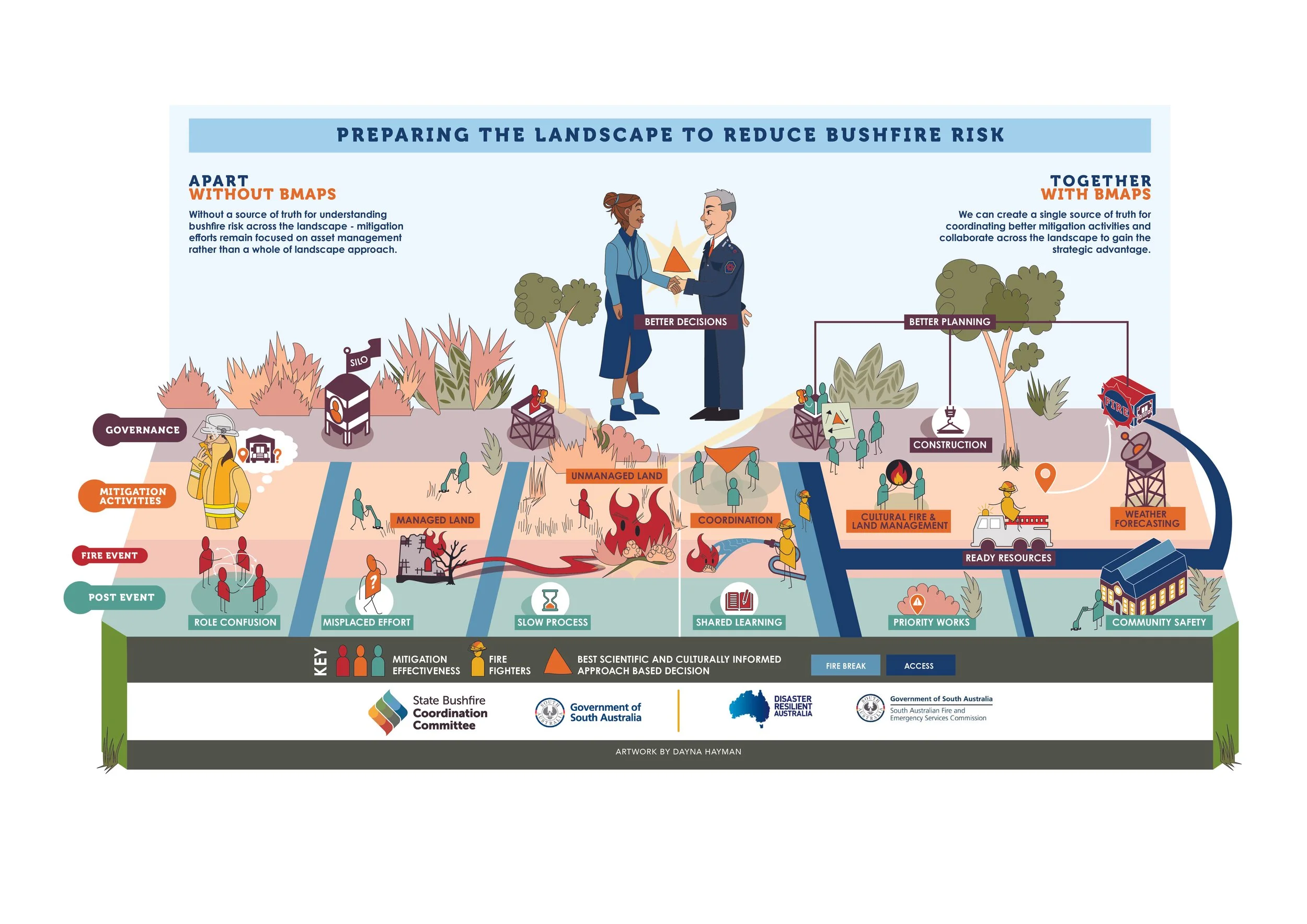
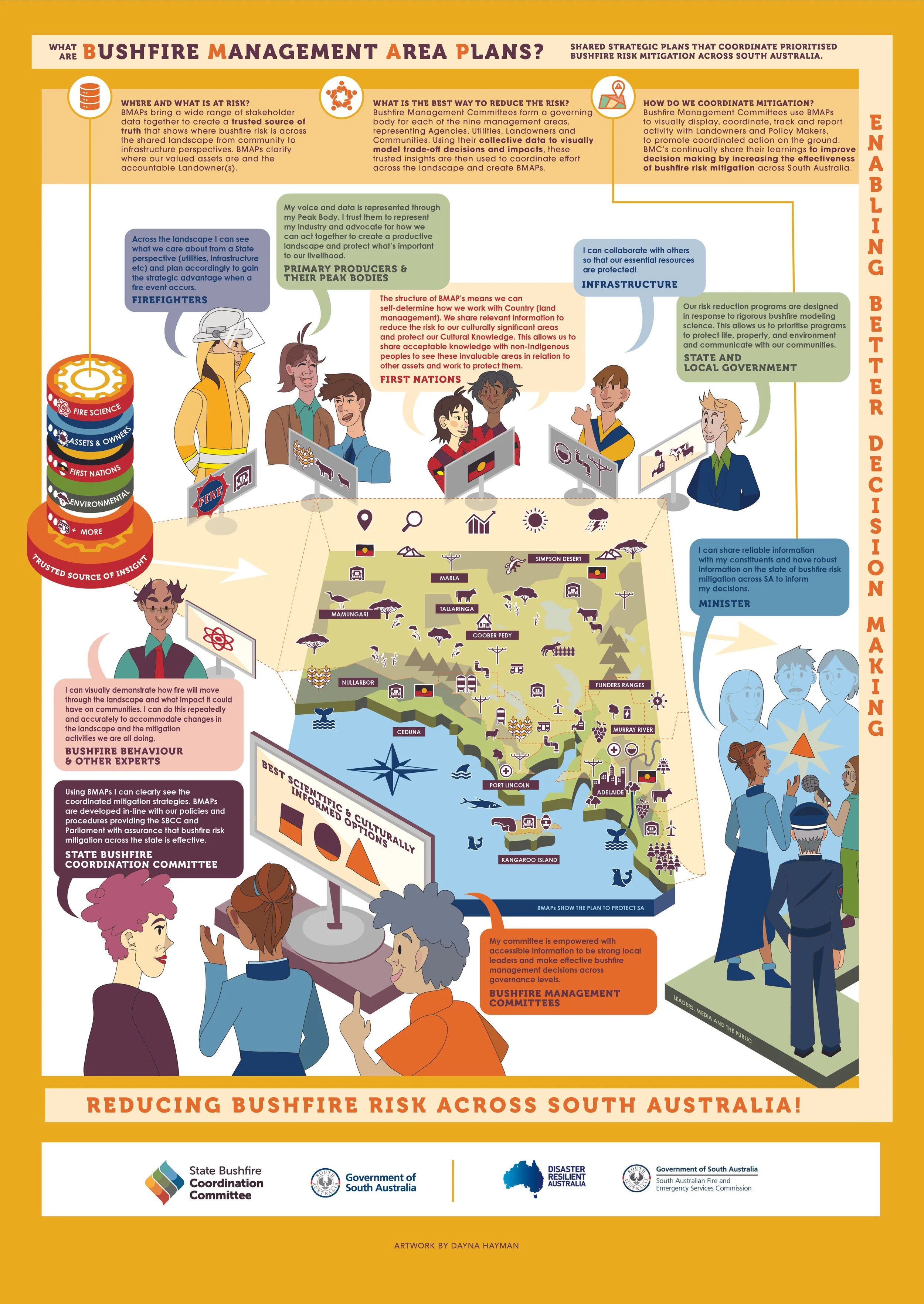
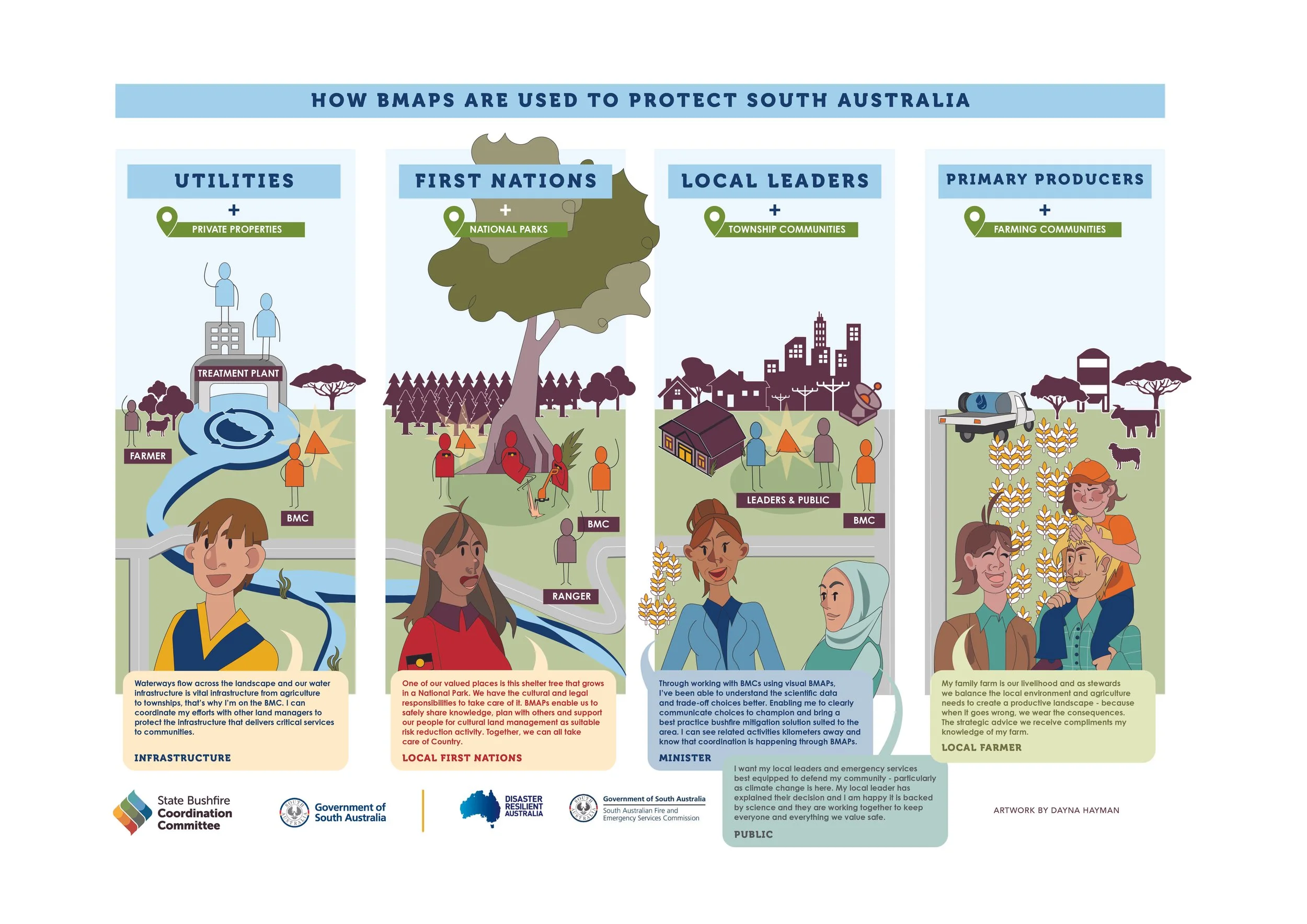
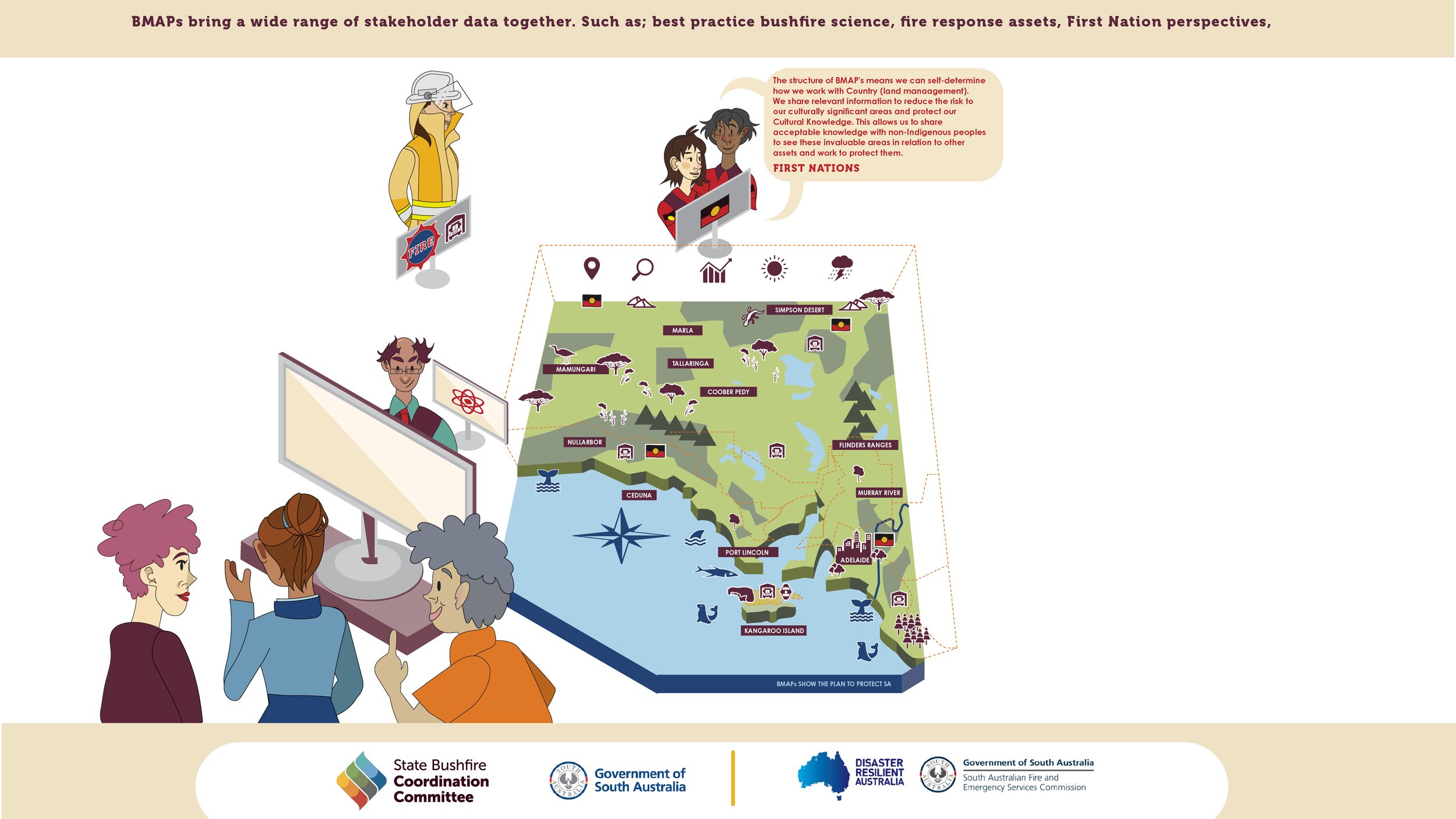
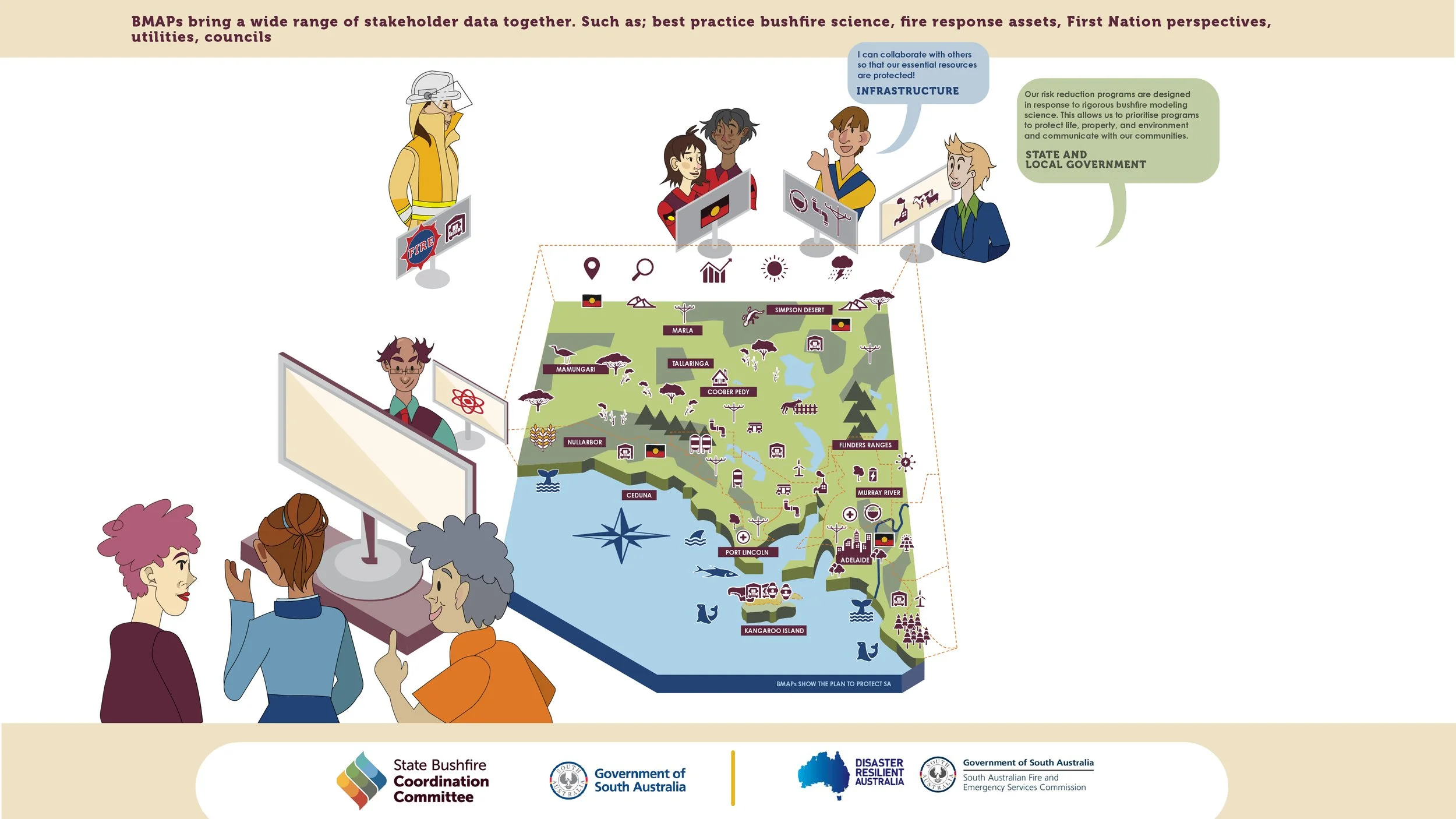
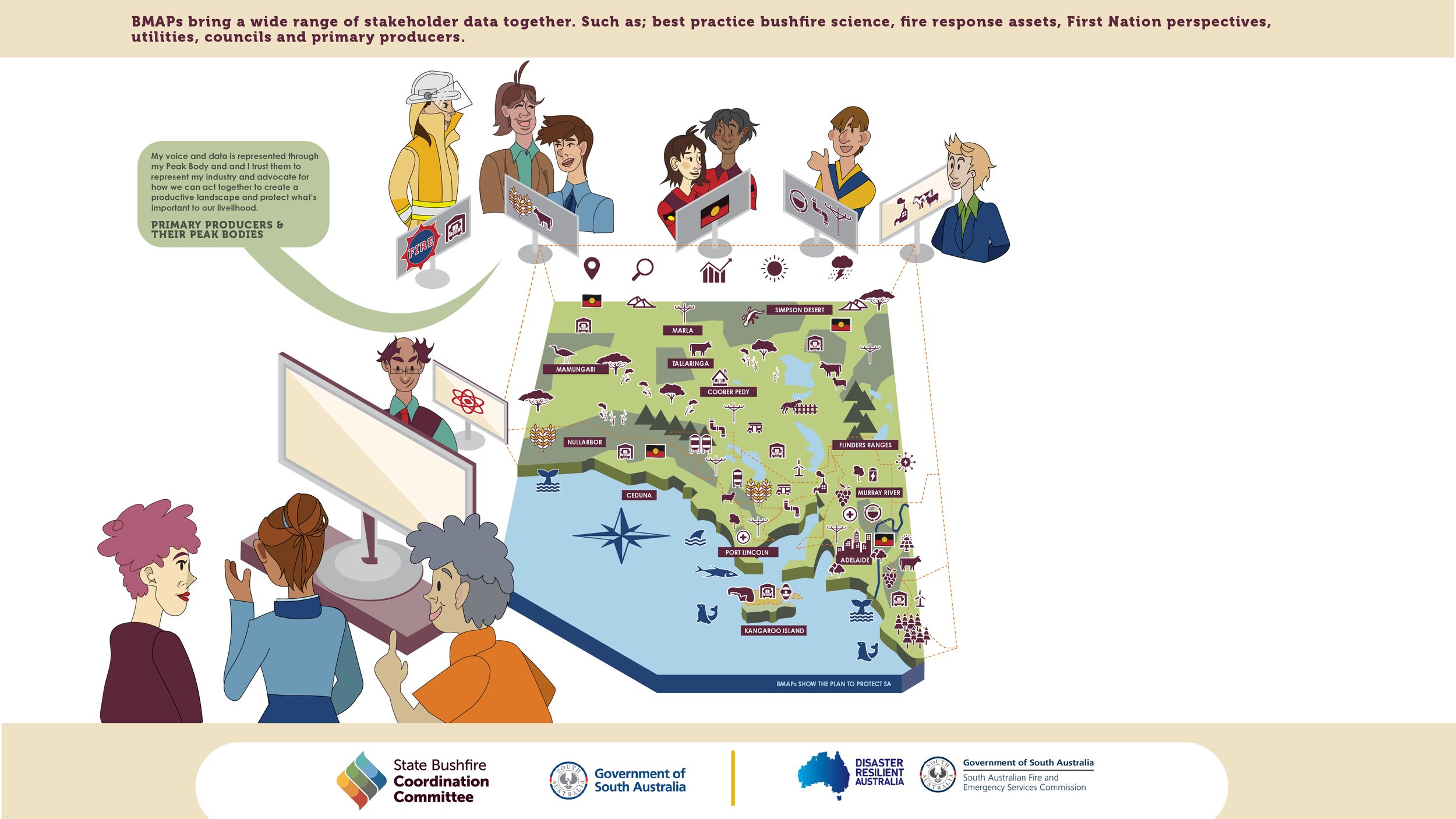
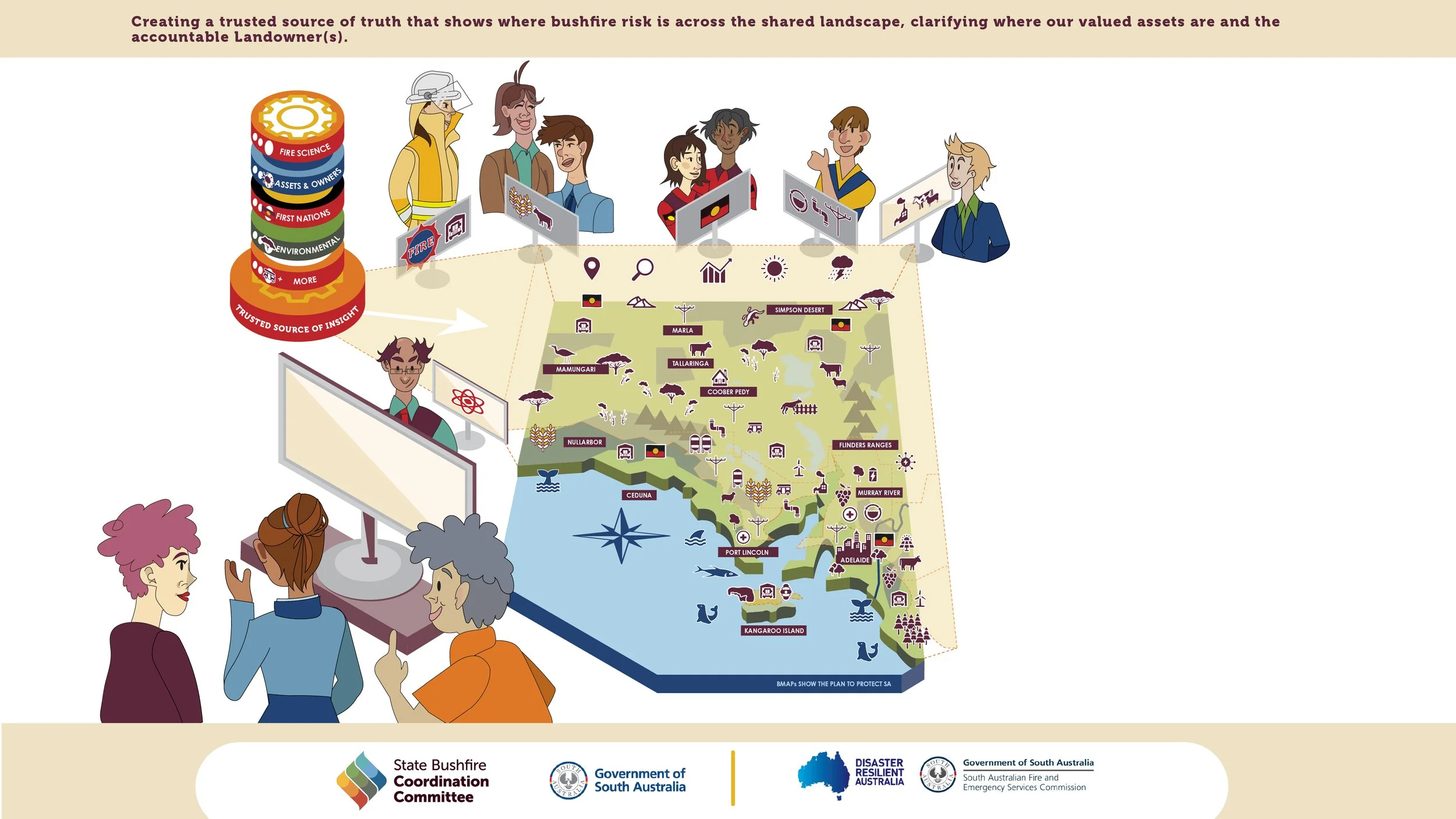
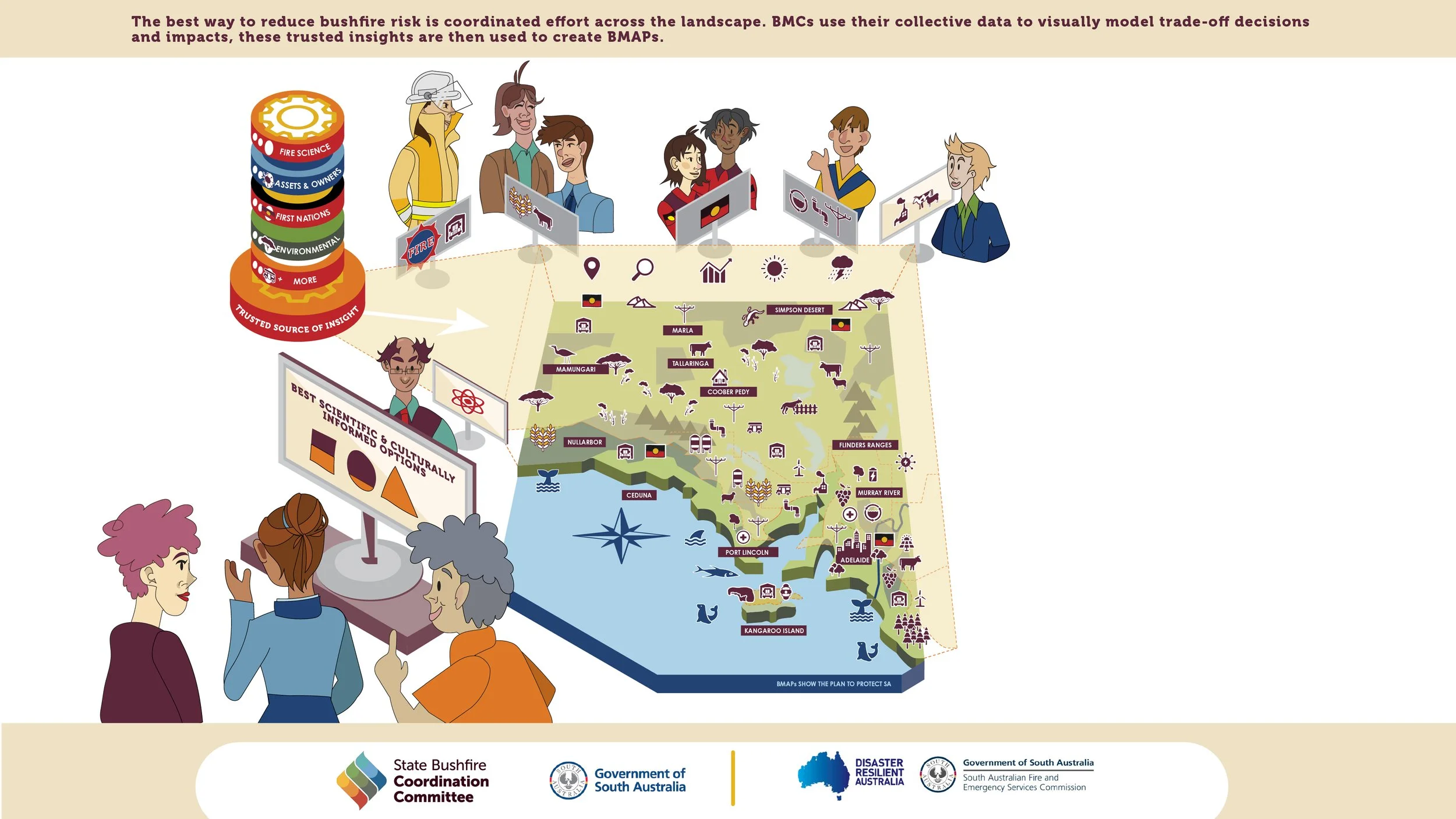
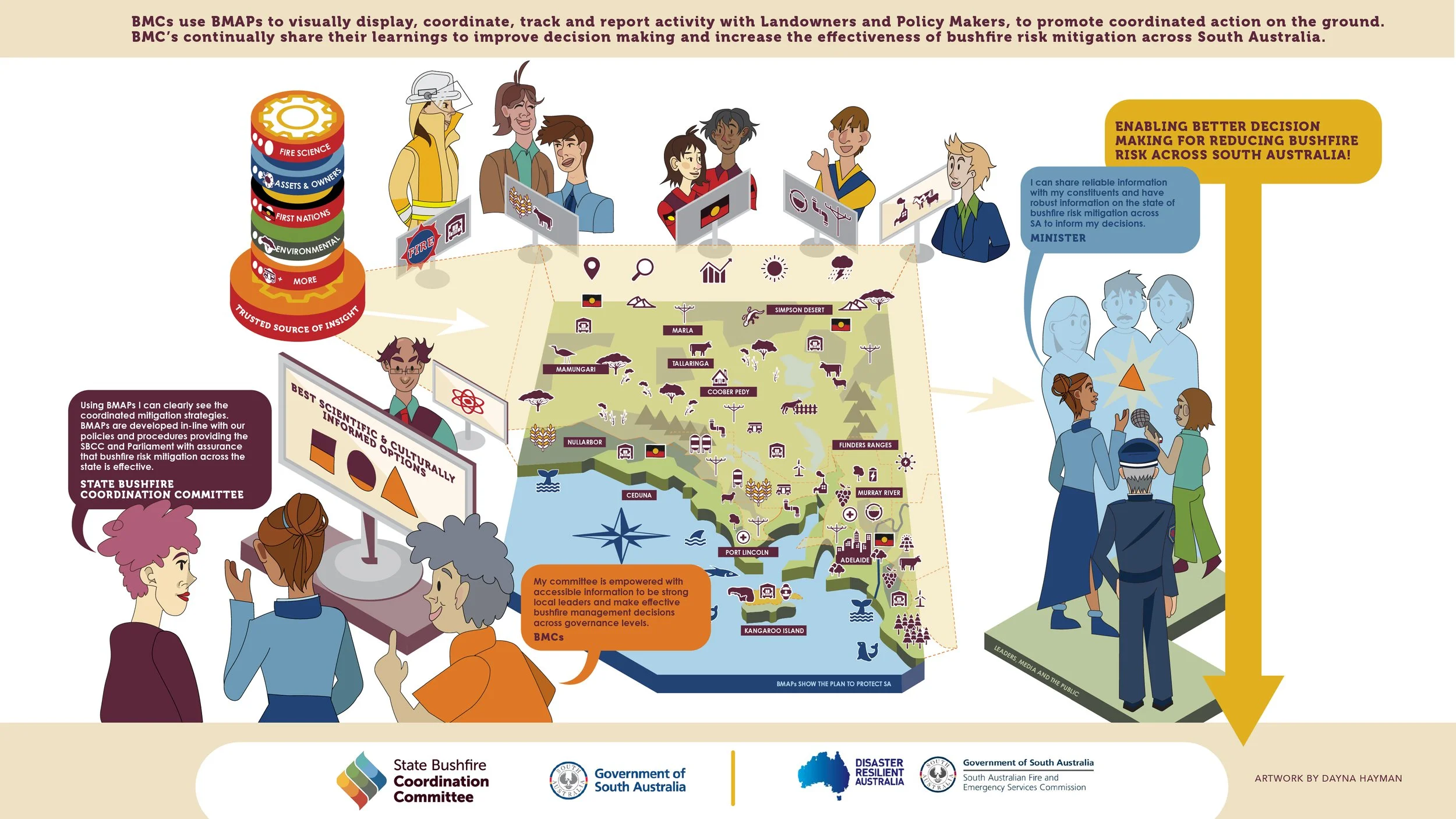
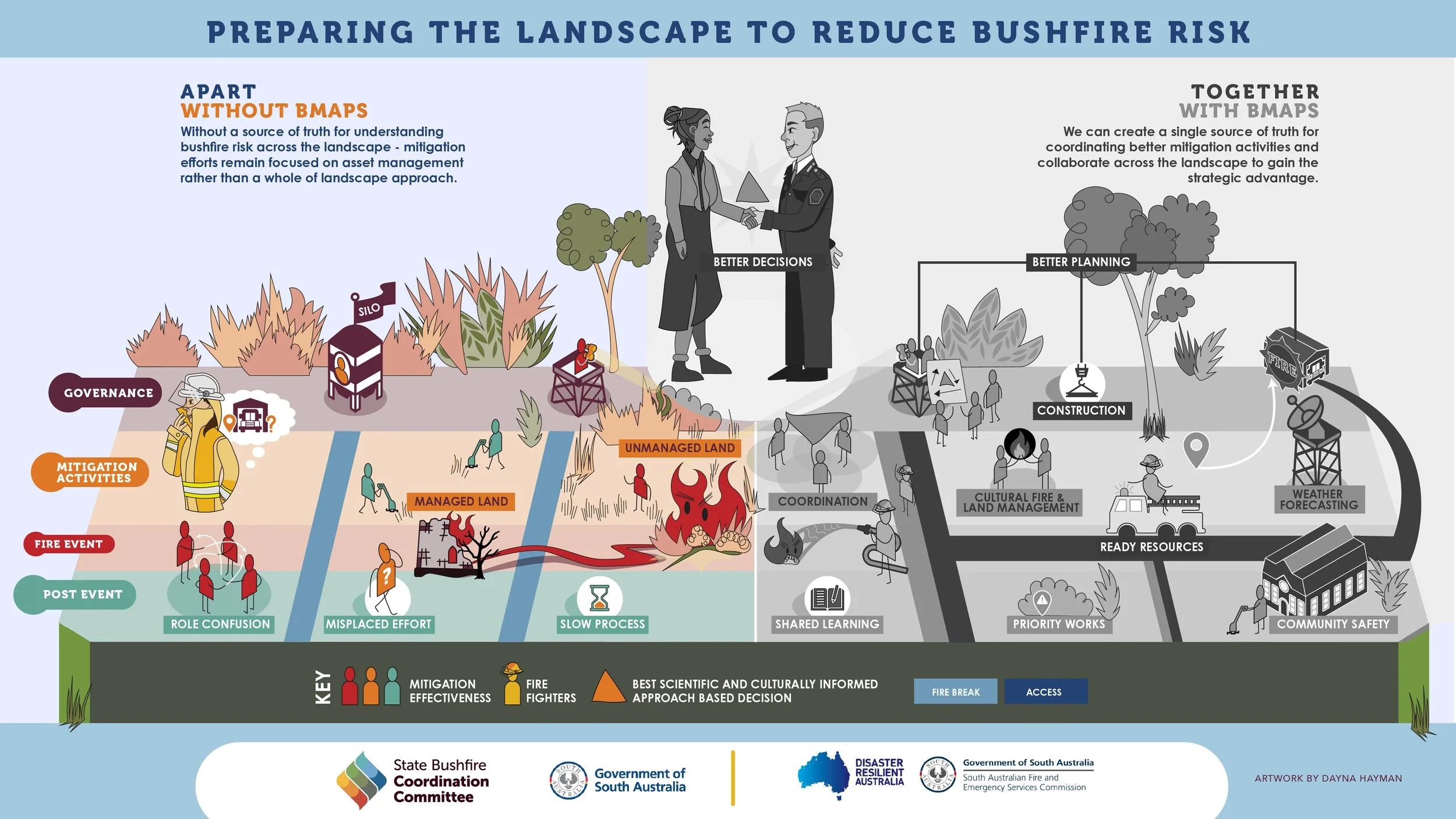
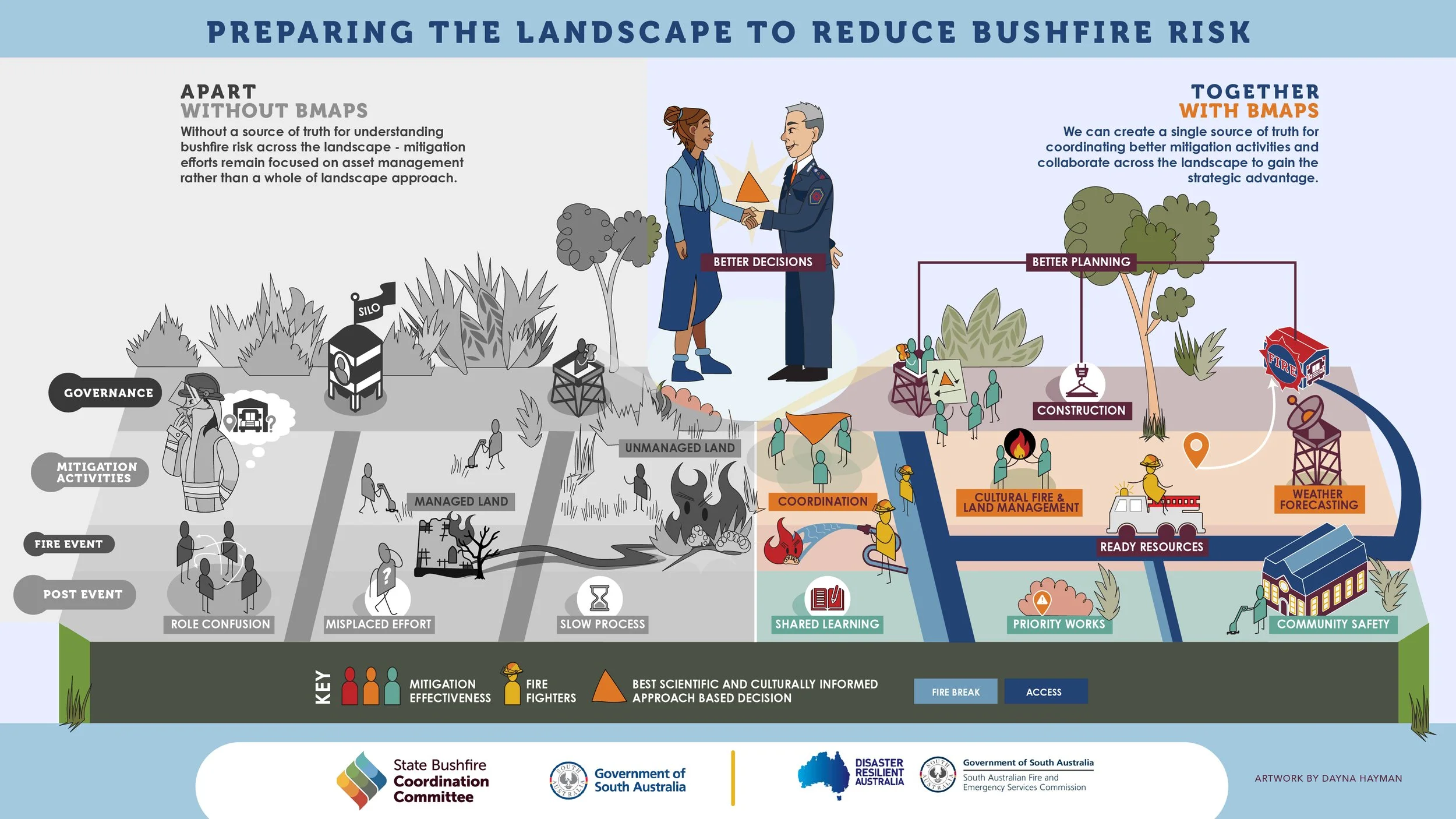
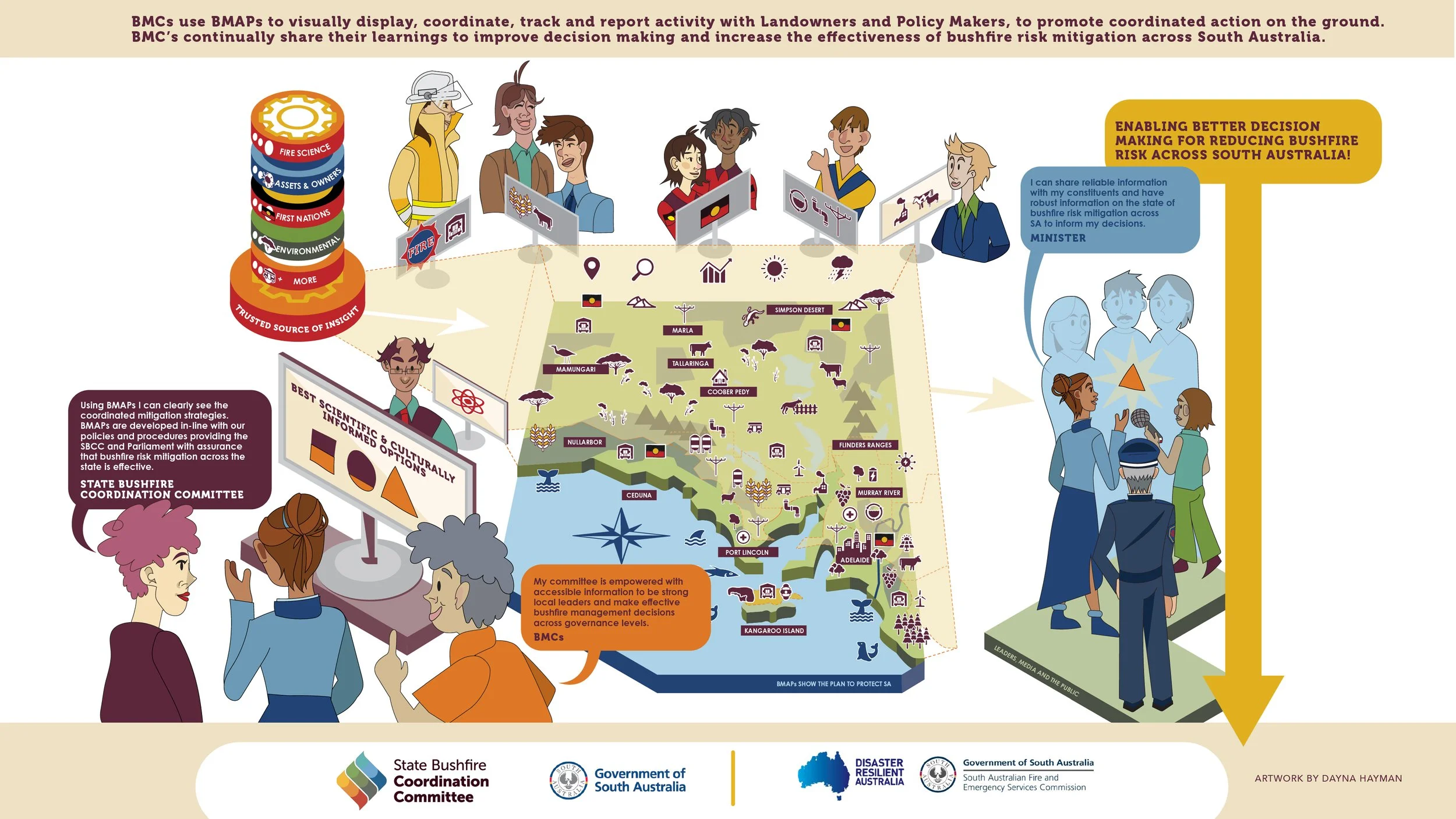
I was engaged by South Australia CFS and the SBCC to deliver a set of visuals that answered; What are BMAPs? How we reduce bushfire risk across the landscape? Who will benefit? With the diverse stakeholders involved in delivering BMAPs, there was a need to syntheses the various perspectives into a clear visual narrative that could support creating a common understanding and representation the CFS/SBCC could use to for internal and external audiences.
STAGE 1: CO-CREATE THE VISUAL BRIEF
Working closely with my project counterpart from the CFS we scoped the outcomes of the visuals and who would need to be engaged from the SBCC and wider stakeholders across my four-stage design approach. I created an engagement plan (who needs to be involve & at what stage), a project timeline and ways of working (e.g. scheduling regular team check-ins & what programs best to use). In a 1-hour Creative Concepts Session with the identified Core Team, we tested my initial components and ideas from the scoping discussions and desktop research. Inviting the Core Team to unpack and expand what was needed to communicate and the vision, audience and core concepts of BMAPs. This was then synthesised into a Reverse Design Brief Document – that guided the project and ensured we remained focused on the goals and timelines.
STAGE 2: CONCEPTUALISATION
Using sketches to prototype ideas, I gathered rapid feedback from CFS, moving rapidly through iterating onto three clear concepts. These concepts were then refined in a 1-2 Hour Digital Conceptualisation Workshop with key Authorship Members – people who were engaged and wanted a say in the visual execution. From this engagement session, we were able to test language, clarify science and bring Authorship Members into the creative process – giving them opportunity to contribute early. By gathering ideas early with sketches, the concepts transformed as required (and sometimes drastically) to meet varied expectations.
STAGE 3: AUDIENCE TESTING
With initial concepts tested, I refined the drawings into high-fidelity sketches prototypes ready for Audience Testing – those identified as wider stakeholders such as Utilities, Local Governments and other Asset Owners. I prepared focus group plans. I lead the two focus groups, x2 additional interviews, engaging a total of 40+ participants. Across these sessions we explored languages, information accuracy and resonance with Audiences.
STAGE 4: ARTWORK DELIVERY
The feedback from audience testing was distilled and then reviewed with the Core Team – together deciding what feedback to actioned and make clear decisions on the concepts so that I could confidently move into delivering the final digital vector illustration and artworks. By engaging early and iterating with stakeholders we avoided budget burn by having to redo labour intensive artworks. With my Core Team, using Google Docs to track final feedback, we were able to rapidly polish the final artworks and confidently prepare for final stage.
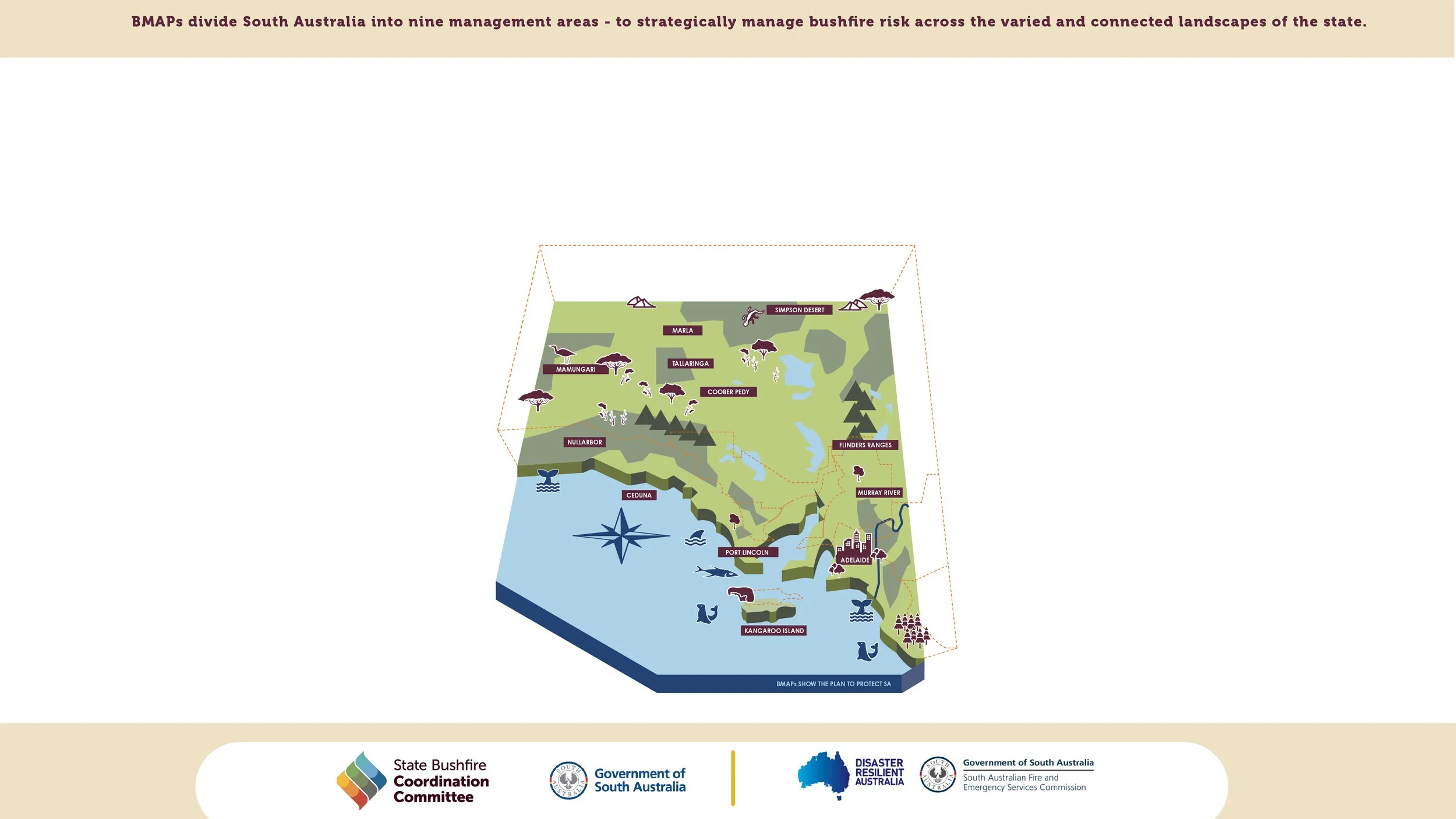
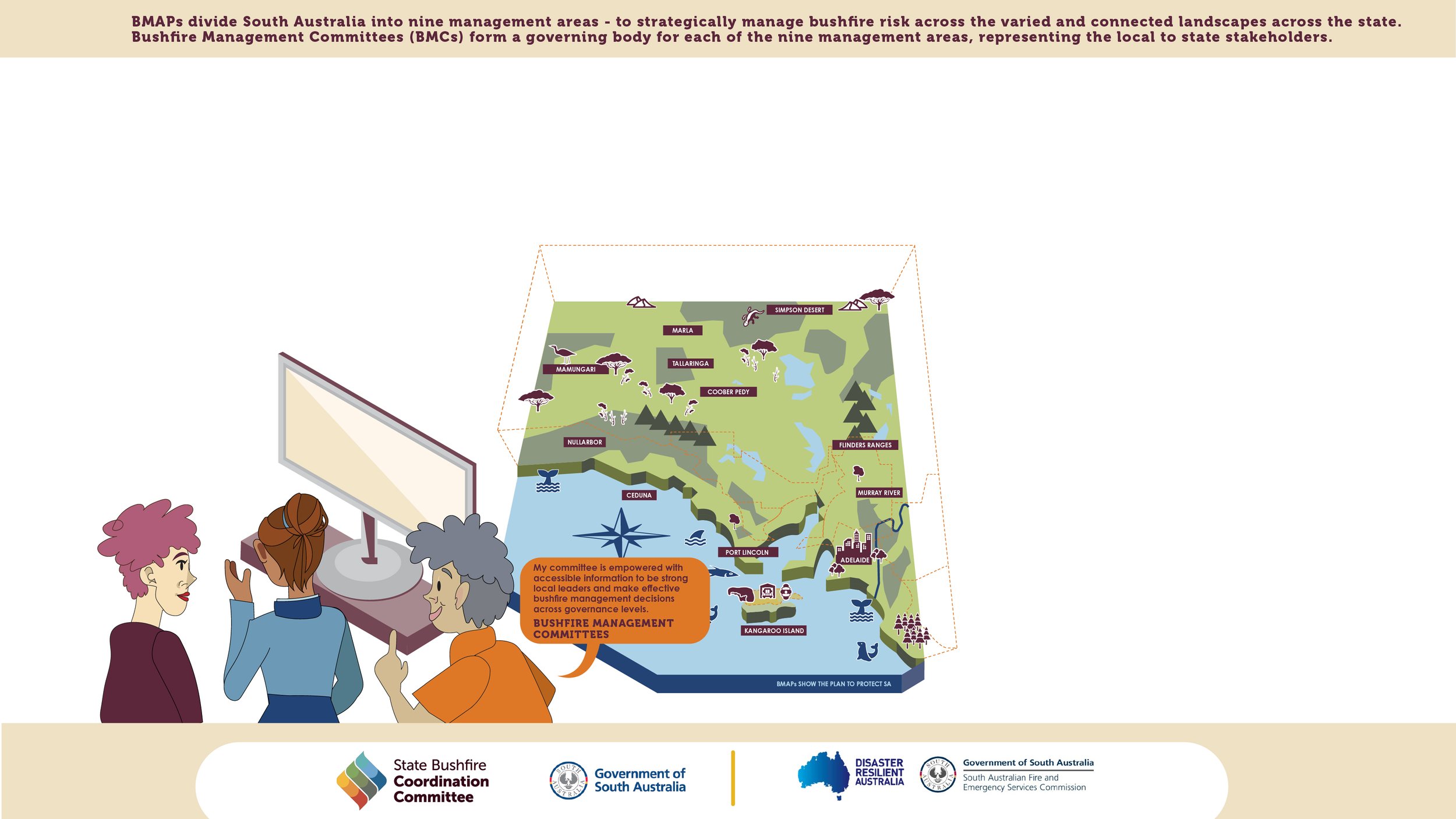
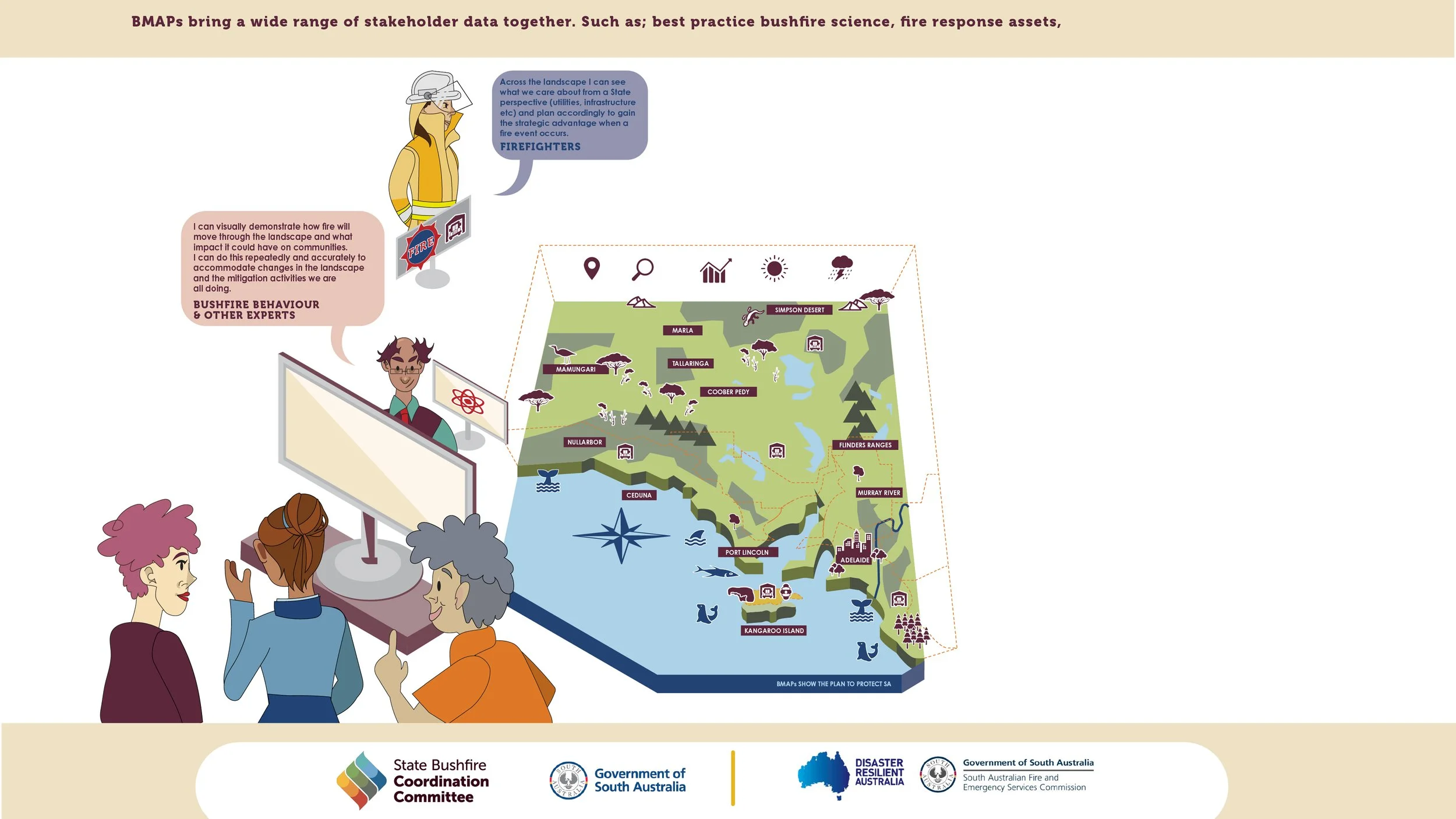
The three visual posters were designed to have a clear narrative that told the detailed story of BMAPs. From the visuals developed I reformatted the posters into staged power point presentations, large event banners and several vector graphics and icons for website and wider flexible use.
STAGE 5: ENDORSEMENT PRESENTATION TO THE SBCC
A part of working with large government organisations means showcasing a project for endorsement. By this stage, many of the SBCC members had opportunity to engage across the visuals and therefore weren’t surprised at where we had landed. My 30-minute presentation quickly took the SBCC through the journey, showing engagement stats, visual iterations and key decisions made. Because of my design process, my final artworks (3 posters for print & website content) were endorsed, and I was invited to add an additional use case and run an additional smaller design sprint to visualise the BMAPs Process.
ADDITIONAL SCOPE REQUEST FROM SBBC
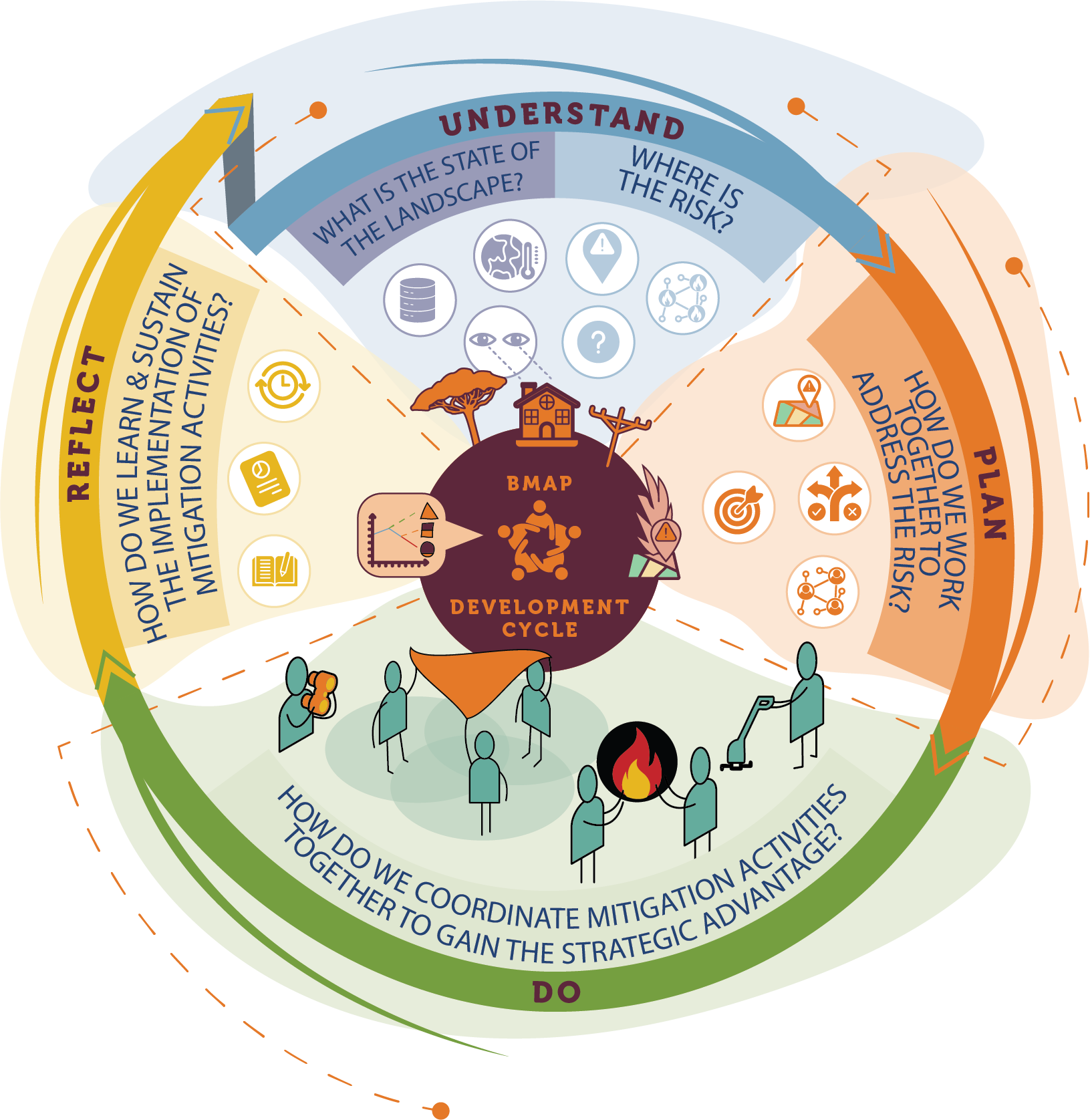
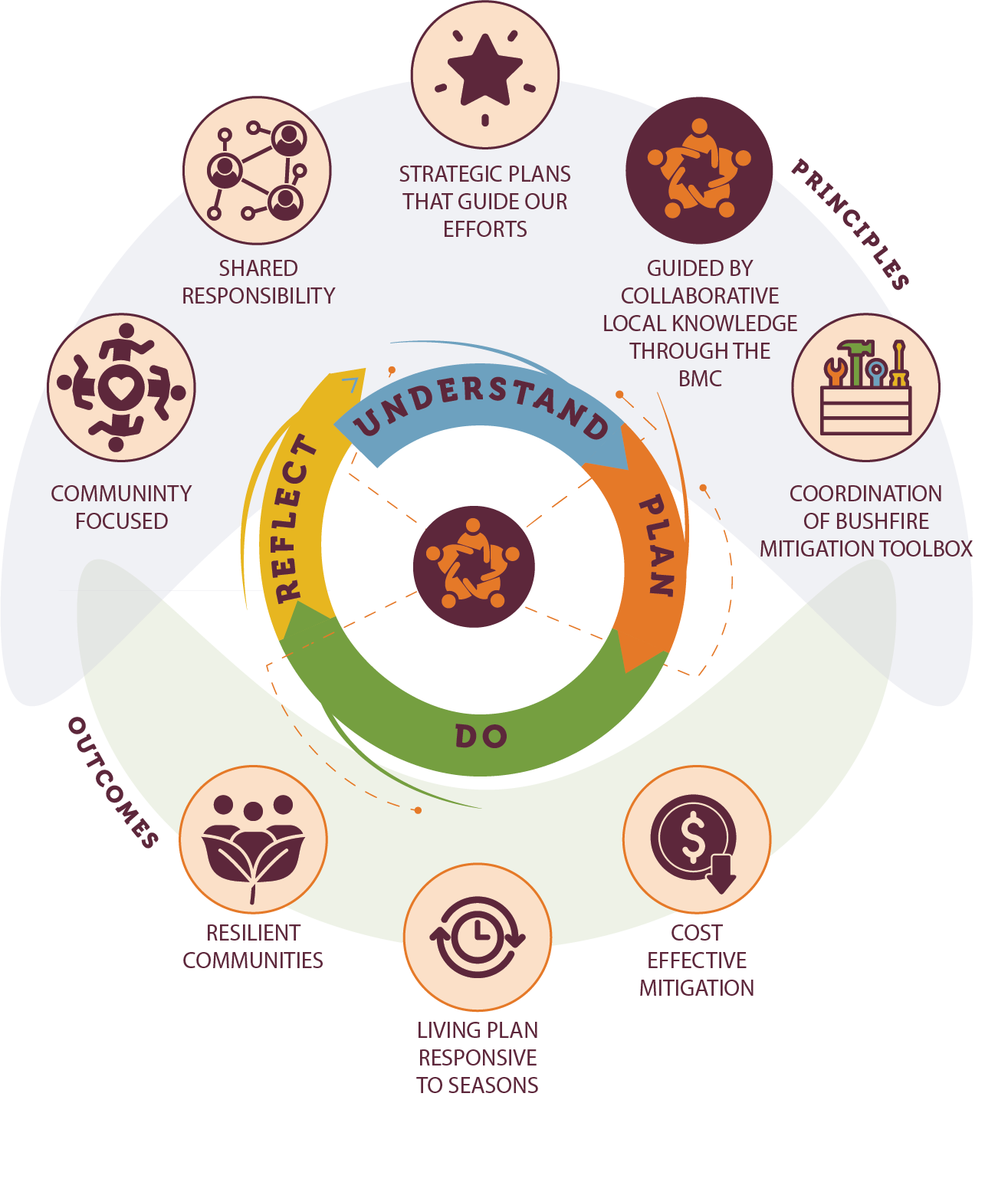
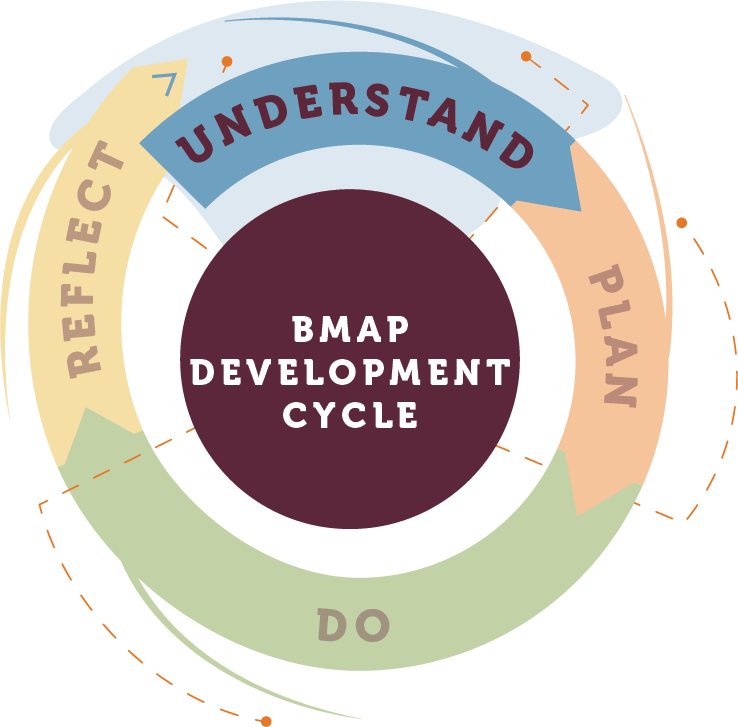
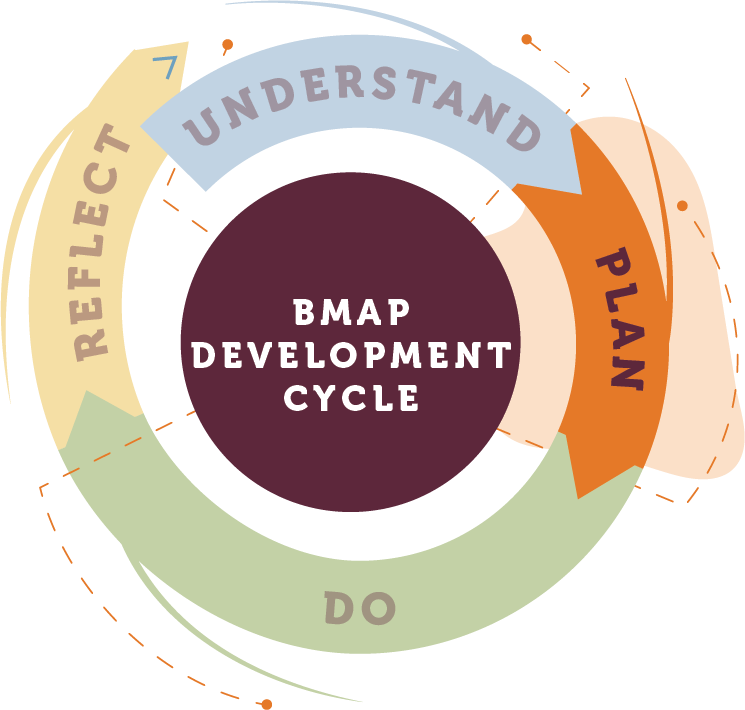
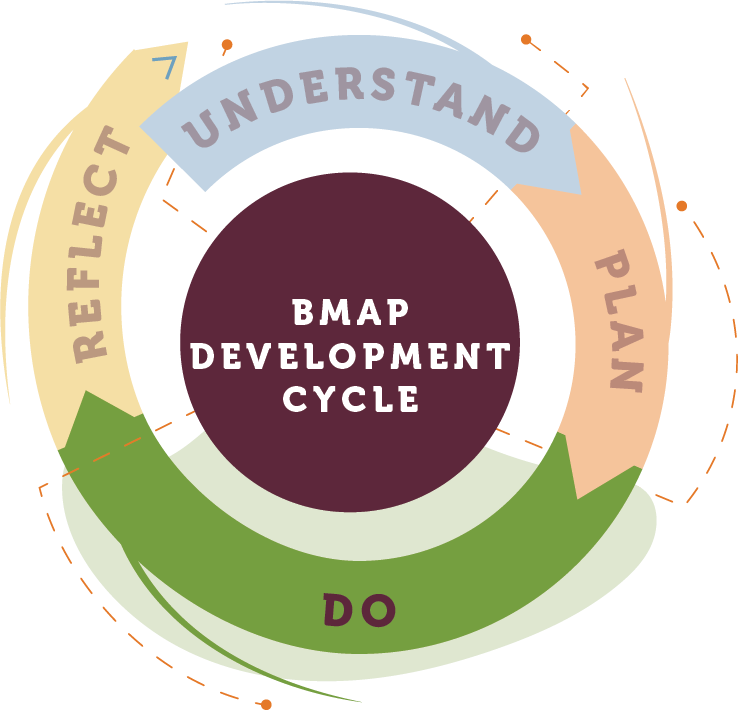
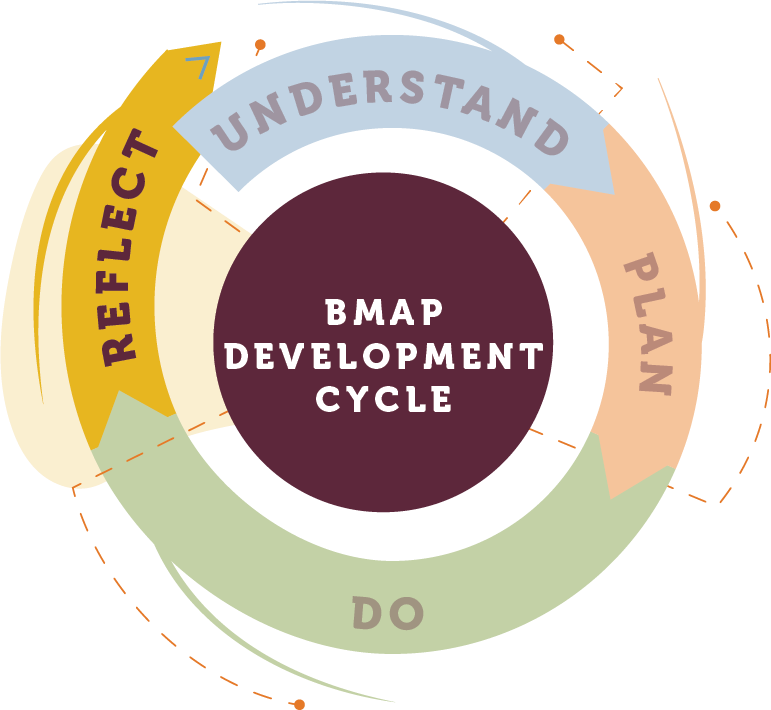
THE ITERATIVE BMAPS DEVELOPMENT PROCESS
In a single session, I engaged the CFS Core Team to unpack their perspectives on how they wanted to articulate the process to developing the BMAPs. There was some natural tension between the Core Team as they each described the process slightly differently and had previously struggled to articulate together. I designed a 1-Hour Creative Session that set the context and key principles that defined the process. I facilitated the discussion that allowed the team to voice how they each described the process and move into defining a 4 stepped process and the activities within each step. A key part of how I design collaboration sessions is by leading drawing activities with participants. This gives energy to participants and allows me to rapidly test and gather ideas. It was through this final activity with my Core Team that I gathered visual concepts that became the final process graphics.
This project demonstrates how I delivery high-quality graphics collaboratively to meet a variety of communication needs (e.g. print, digital channels, translating complex content for audiences). This is a scalable, adaptable process to deliver basic graphic design outputs too complex concepts/scientific content.